Semrush pricing looks simple until a team moves beyond one login and an occasional keyword search.
The headline rate matters, but so do tracked-keyword limits, extra users, add-ons, and the time needed to use findings well.
This review is for marketers, agencies, and business owners deciding whether the platform fits a live workload.
It explains where the suite can reduce tool sprawl, where costs rise quietly, and when a leaner setup makes more sense.
The First Price You See Is Not the Entire Budget
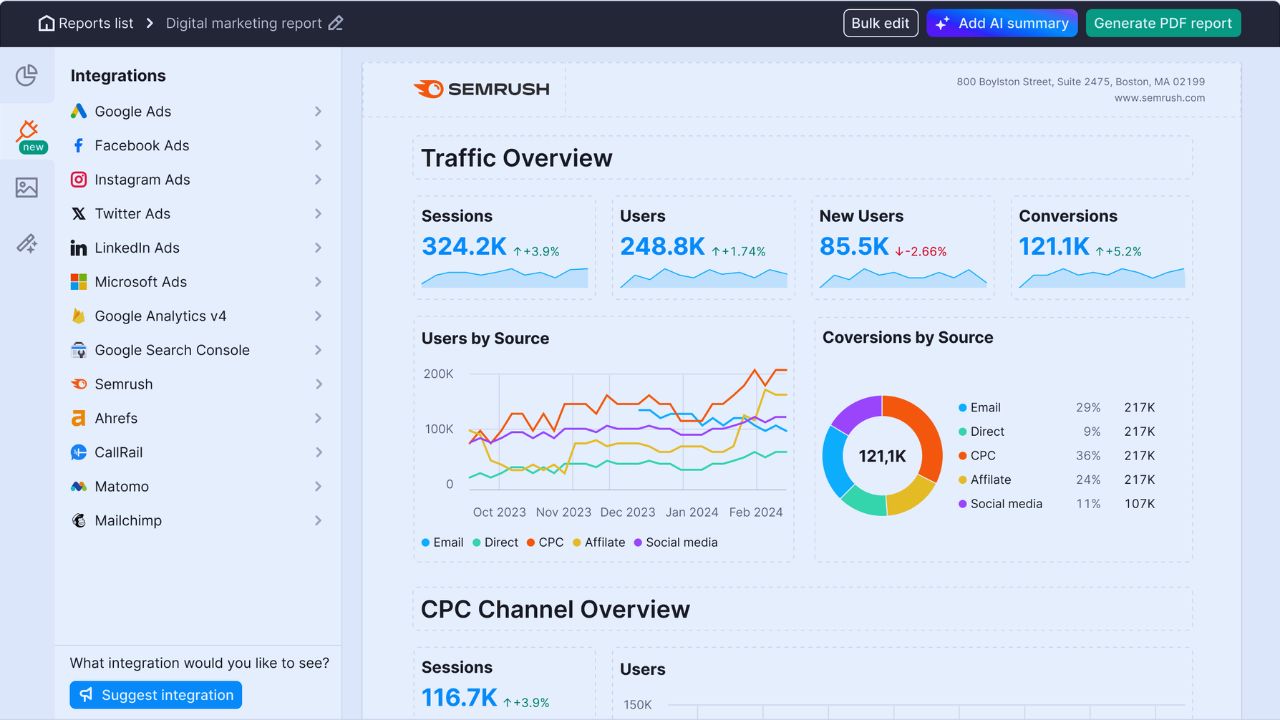
A Semrush plan can cover keyword research, competitor analysis, Site Audit, backlink work, position tracking, and reporting, which may replace smaller subscriptions.
That does not automatically make it cheaper. A solo consultant using one audit and a few searches monthly may pay for unused capacity, while an agency may save time on reporting.
Start with the work performed every week, then add the people, websites, keywords, and reports it requires. That produces a real cost picture before finance.
Monthly Pricing Lets You Validate the Fit Before You Commit
The standalone SEO Toolkit lists Pro at $139.95 per month, Guru at $249.95, and Business at $499.95.
Annual billing lowers the equivalent monthly rates to $117.33, $208.33, and $416.66, but the full year is paid upfront.
Monthly billing suits a new process or an agency onboarding its first SEO clients. Annual billing fits stable use, because a discount has little value when the platform sits idle after one quarter.
Pick Capacity Before You Pay for Advanced Features
Feature lists are useful, but capacity is usually the sharper dividing line.
Pro supports five monitored websites and 500 tracked keywords; Guru rises to 15 websites and 1,500 keywords; Business reaches 40 websites and 5,000 keywords.
Each plan also expands crawl, report, and idea limits. Match the active portfolio to the limits you will reach, not the largest number that sounds reassuring.
Pro Makes Sense When One Person Owns a Defined SEO Routine
Pro is aimed at freelancers, beginners, and smaller businesses needing regular research, rank tracking, and technical checks without a large client roster.
It can suit a local service company monitoring its main site, a handful of locations, and commercial queries. It becomes restrictive when several people need access or clients require historical reporting.
Treat Pro as a working baseline, not a permanent identity. It should support one focused operator who knows which reports influence decisions.
Guru Pays for Context, Not Just More Rows of Data
Guru adds larger limits, historical data, content tools, multi-targeting in Position Tracking, and Looker Studio reporting integrations.
Those additions matter when an agency needs to explain a visibility change, a content team runs several clusters, or a manager needs reliable client reports.
They add little to a small site without a publishing rhythm. Identify the weekly job that needs historical context or repeatable reporting before paying for it.
Business Is Usually a Scale Decision, Not a Prestige Upgrade
Business adds higher capacity, SEO Share of Voice tracking, and API access. It suits agencies with multiple active accounts, larger in-house teams, or businesses needing broad reporting and data access.
It is rarely justified by one important site unless usage approaches its ceilings. Buying early can hide a process problem behind a larger dashboard.
The sensible reason is documented demand for larger workloads, not the idea that more data creates better strategy.
Also Read: Notion Review After a Major Update
Extra Users Change the Purchase Faster Than Most Teams Expect
Every SEO Toolkit tier starts with one user, and additional access costs $45 on Pro, $80 on Guru, or $100 on Business per person each month.
Those users share the subscription’s usage limits, so more analysts do not multiply tracked keywords, crawl pages, or report results.
Decide who needs active access and who can receive exported findings. Seat planning and shared limits belong in the first budget, not a later surprise.
Add-Ons Need Their Own Business Case
Semrush sells separate toolkits for content, local marketing, social, traffic and market research, advertising, and AI visibility.
Each should answer a particular question: does local tooling reduce listings work, does content tooling improve a publishing bottleneck, or does traffic intelligence change a market decision?
The Content Toolkit is priced separately at $60 monthly, while Traffic & Market is priced per user and costly. Avoid adjacent capabilities purchased merely because they sit near the core subscription.
ROI Is About Decisions Changed, Not a Convenient Traffic Formula
It is tempting to assume a subscription doubles traffic, maintain a fixed conversion rate, and produce a neat revenue figure.
That math ignores seasonality, lead quality, sales capacity, page changes, and work done outside the platform.
A stronger review asks which pages were fixed, which topics were dropped, which links were reclaimed, and whether reporting took less time.
Measure fewer blind spots and better prioritization before promising revenue from one tool.
The Trial Should Test a Normal Week, Not a Perfect Demo
Many Semrush toolkits have seven-day trials, though exports can be restricted while testing. Use one active site or client account, a keyword set, and a genuine technical question.
Run an audit, compare competitors, build a tracking list, and write a short plan from what you find.
The aim is to see whether the team understands the reports, not whether the interface looks impressive. These trial checks focus on practical use:
- Can the data support one clear priority?
- Does the team use findings without creating extra reporting work?
- Will limits fit the next three months of real projects?
Consider a Smaller Tool When the Work Is Still Occasional
A freelancer publishing irregularly, a new site without a clear revenue model, or a business needing only basic rank checks may not need a broad suite yet.
Fundamental site fixes, consistent content, customer research, and a lighter keyword tool can produce more value at that stage.
The same applies when nobody owns SEO work after the subscription begins. A lower-cost platform may fit better until there is a repeatable workflow and a named decision-maker for the data.
The Subscription Is Easier to Defend When It Replaces Friction
Semrush is worth considering when research, auditing, tracking, and reporting support work a team already performs regularly.
It is harder to justify when users chase metrics without decisions, buy add-ons without owners, or treat an annual discount as a reason to skip a trial.
Start with a manageable plan, model users and limits before signing, and review the account after the first reporting cycle. The strongest purchase produces clearer priorities and less manual searching, not a longer tool list.